Complete Guide to Dry Skin: Causes, Barrier Damage & Natural Moisture Solutions
Dry skin is not just a seasonal problem but a sign of skin barrier damage. This complete guide explains the science behind dryness, transepidermal water loss, and how natural solutions like glycerin and aloe vera help restore long-term moisture balance.

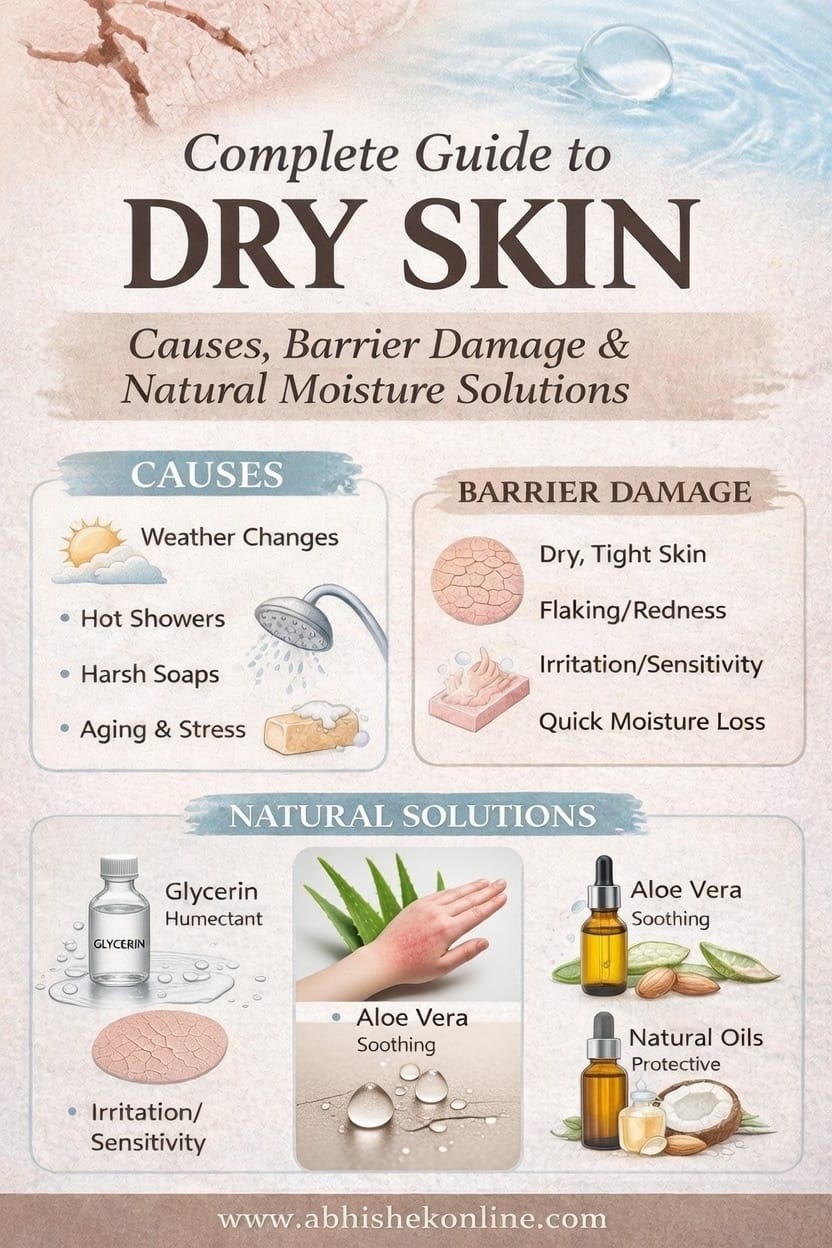
Dry skin is more than just a seasonal inconvenience. It is often a signal that your skin barrier is struggling to retain moisture and protect itself from environmental stress. Many people apply moisturizers repeatedly, yet their skin still feels tight, flaky, or irritated. The problem is not always lack of cream. It is often barrier dysfunction.
Modern lifestyle factors such as air conditioning, long screen exposure, hot showers, harsh soaps, stress, and pollution are constantly weakening the outer protective layer of the skin. When this barrier is compromised, water escapes more easily, leading to chronic dryness and sensitivity.
This guide explains the science behind dry skin, the role of barrier damage, and how natural moisture solutions like glycerin and aloe vera can help restore balance.
What Is Dry Skin? The Science Behind It
Your skin’s outermost layer is called the stratum corneum. It functions like a brick-and-mortar structure:
- Skin cells = bricks
- Lipids (fats) = mortar
This layer prevents excessive water loss and blocks irritants.
Dry skin vs dehydrated skin: Dry skin is a skin type lacking natural oils (sebum) and lipids, leading to a damaged barrier. Dehydrated skin lacks water, even if it is oily. A person can have oily + dehydrated skin at the same time. Both show tightness and flakiness, but the treatment approach differs slightly — dry skin needs more lipids while dehydrated skin needs humectants like glycerin to pull in moisture.
Transepidermal Water Loss (TEWL)
TEWL refers to the amount of water that passively evaporates from your skin. When the barrier is healthy, TEWL is controlled. When the barrier is damaged, TEWL increases, and dryness follows.
The Role of Lipids
Ceramides, cholesterol, and fatty acids help maintain flexibility and hydration. If these lipids are stripped away by harsh cleansing or environmental stress, the skin loses its ability to retain moisture.
Dry skin is therefore not only about “lack of water.” It is about structural weakness in the barrier.
Major Causes of Dry Skin
1. Low Humidity and Weather Changes
Cold air and indoor heating reduce environmental moisture, increasing water evaporation from the skin.
2. Hot Showers
Hot water dissolves natural oils, weakening the lipid layer.
3. Harsh Soaps and Cleansers
Alkaline products disrupt the skin’s natural pH, damaging barrier proteins.
4. Over-Exfoliation
Frequent scrubbing removes protective cells before they naturally shed.
5. Aging
With age, lipid production decreases, making dryness more common.
6. Chronic Stress
Stress hormones like cortisol impair skin repair and reduce hydration efficiency.
If you have experienced cracked heels or dry lips, these are localized forms of barrier stress and dehydration.
Understanding Skin Barrier Damage
Barrier damage occurs when the protective lipid matrix becomes disrupted.
Signs of Barrier Damage
- Persistent tightness
- Redness after washing
- Flaking
- Increased sensitivity
- Products that previously worked now sting
Why Moisturizers Sometimes Fail
If the barrier is severely compromised, simply applying cream may not be enough. Moisture can evaporate quickly if not sealed properly.
A proper repair strategy includes:
- Attracting moisture
- Soothing inflammation
- Preventing further water loss
This is where ingredient selection becomes important.
Natural Moisture Solutions That Actually Work
Natural does not mean weak. Some naturally derived ingredients are scientifically effective when used correctly.
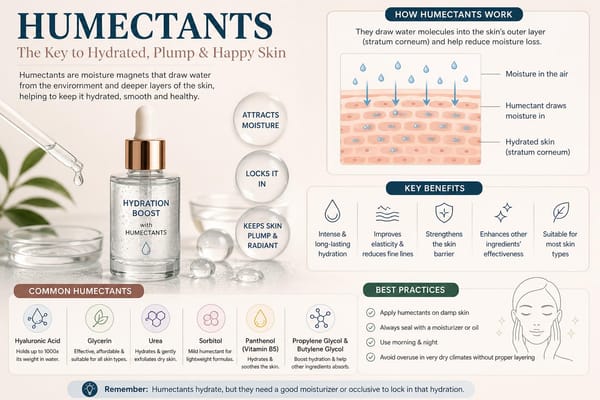
1. Glycerin: The Humectant Powerhouse
Glycerin attracts water molecules into the outer skin layer. It increases hydration and supports barrier recovery.
Benefits:
- Improves skin elasticity
- Reduces flakiness
- Supports long-term hydration
However, glycerin works best when paired with an occlusive layer that prevents moisture from escaping.
2. Aloe Vera: Soothing and Repairing
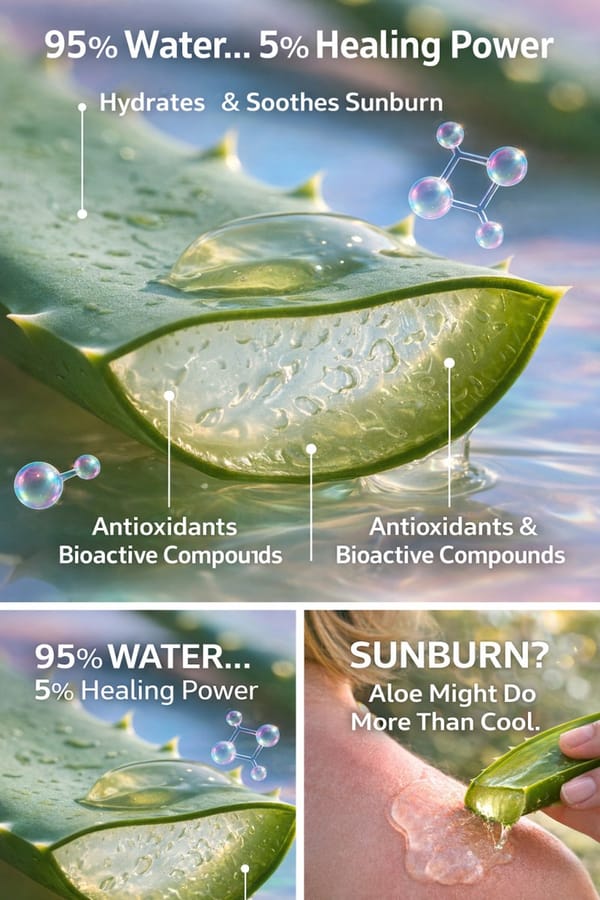
Aloe vera contains polysaccharides that help retain moisture and calm inflammation.
Benefits:
- Reduces irritation
- Supports wound healing
- Hydrates without heaviness
Aloe is particularly helpful for sensitive, inflamed, or sun-exposed skin.
3. Natural Oils (Occlusive Support)
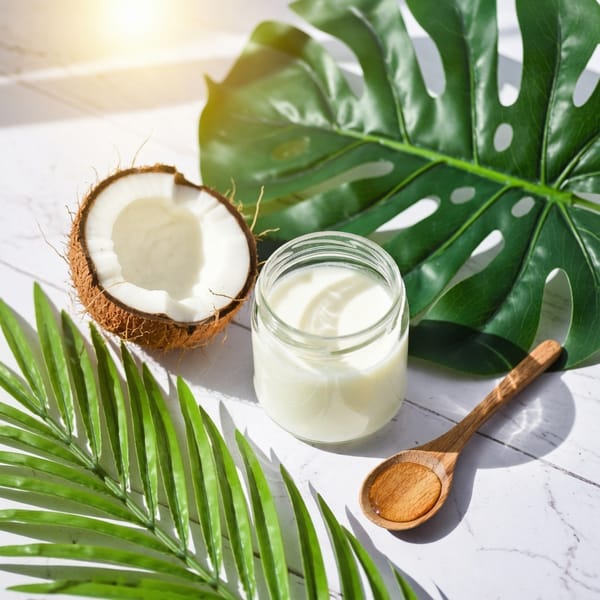
Natural oils such as coconut oil or almond oil help reduce water loss by forming a protective layer.
They should be used carefully on acne-prone skin but are effective for severely dry areas like heels.
4. What to Avoid
- Excessive fragrance
- Overuse of exfoliating acids
- Alcohol-heavy products
- Frequent cleansing
Minimalism often repairs skin faster than aggressive treatment.
Special Dryness Conditions
Dry Lips
Lips lack oil glands, making them more vulnerable to dehydration. Use occlusive balms over hydrating bases.
Cracked Heels
Heels endure pressure and friction, increasing barrier breakdown. Nighttime occlusive layering works well.
AC-Induced Dryness
Air-conditioned environments accelerate TEWL. Using a humidifier and gentle cleansers helps maintain balance.
Simple Dry Skin Repair Routine
Morning
- Gentle cleanser
- Hydrating toner or mist
- Glycerin-based moisturizer
- Sunscreen
Night
- Mild cleansing
- Aloe-based soothing layer
- Moisturizer
- Light oil layer (if needed)
Weekly
- Avoid harsh exfoliation
- Focus on hydration masks
- Observe how skin responds
Consistency matters more than complexity.
Final Thoughts
Dry skin is rarely just a cosmetic issue. It is often a structural imbalance in the skin barrier. Instead of chasing quick fixes, focus on restoring hydration pathways and strengthening lipid support.
With proper understanding, strategic ingredient use, and consistent care, natural moisture solutions can effectively restore skin comfort and resilience.
Frequently Asked Questions
Can drinking more water fix dry skin?
Drinking water helps overall health, but dry skin is usually caused by skin barrier damage and increased transepidermal water loss (TEWL). Topical repair with humectants like glycerin and occlusives is essential.
How long does it take to repair a damaged skin barrier?
Mild damage improves in 1–2 weeks with consistent care. Moderate to severe barrier damage may take 4–6 weeks of gentle cleansing, glycerin, aloe vera, and occlusive layering.
Is glycerin good for dry skin?
Yes! Glycerin is a powerful humectant that draws moisture into the skin, improves elasticity, and reduces flakiness. Always pair it with an occlusive (oil or balm) for best results.
Can aloe vera repair skin barrier damage?
Aloe vera soothes inflammation, supports wound healing, and helps retain moisture. It works best as part of a barrier-repair routine alongside glycerin and natural oils.
Why does my skin feel tight after washing?
Harsh cleansers and hot water strip natural lipids and raise TEWL, temporarily damaging the skin barrier. Switch to gentle, pH-balanced cleansers and follow with immediate hydration.
Should you exfoliate dry skin?
Only very gently and infrequently. Over-exfoliation removes protective skin cells and worsens barrier damage. Focus on hydration and repair first.
What is the best natural moisturizer for dry skin?
A combination of glycerin (humectant) + aloe vera (soothing) + a light natural oil like coconut or almond (occlusive) gives the best results without clogging pores.
How do I fix dry lips and cracked heels?
Use a hydrating base (glycerin or aloe) followed by a thick occlusive balm at night. For heels, layer and wear socks overnight.
Does air conditioning cause dry skin?
Yes. AC drastically lowers humidity and increases TEWL. Use a humidifier, gentle cleansing, and extra moisturizing steps during AC season.