Digital Stress and Skin Health: How Screen Time Affects Your Mind & Face
Excessive screen time doesn’t just strain your eyes — it can disturb sleep, increase stress hormones, and even affect your skin’s natural repair process. Discover the science-backed link between digital stress, mental health, and dull or aging skin — and learn how to protect your mind and face.


In today’s hyper-connected world, screen exposure has become unavoidable. From smartphones to laptops, digital devices dominate both work and leisure. However, growing scientific evidence suggests that prolonged screen time may impact not only mental health and sleep quality but also visible skin health.
This hidden connection between digital stress, emotional imbalance, and skin condition is becoming increasingly relevant in modern lifestyle medicine.
What Is Digital Stress?
Digital stress refers to the psychological and physiological strain caused by excessive or unmanaged screen use. It includes:
- Mental fatigue
- Emotional overload
- Reduced physical movement
- Sleep disruption
- Continuous cognitive stimulation
Unlike occasional screen use, chronic exposure without breaks can create sustained stress responses in the body.
1. Screen Time and Mental Health: Scientific Evidence
Several peer-reviewed studies have linked excessive screen time with mental health challenges.
Anxiety & Depression Correlation
Research published in international health journals has shown that higher daily screen time is associated with increased levels of anxiety and depressive symptoms, particularly in adolescents and young adults.
Sleep disruption and reduced physical activity often mediate this relationship.
Emotional Well being
Passive scrolling and social comparison on digital platforms have been linked to lower emotional well being in multiple population studies.
This does not mean screens are inherently harmful — but excessive, unregulated use appears to increase psychological strain.
2. Sleep Disruption: The Core Mechanism
Blue light emitted from screens suppresses melatonin, the hormone responsible for regulating sleep cycles.
Poor sleep leads to:
- Increased cortisol (stress hormone)
- Reduced emotional regulation
- Slower cellular repair
- Increased inflammation
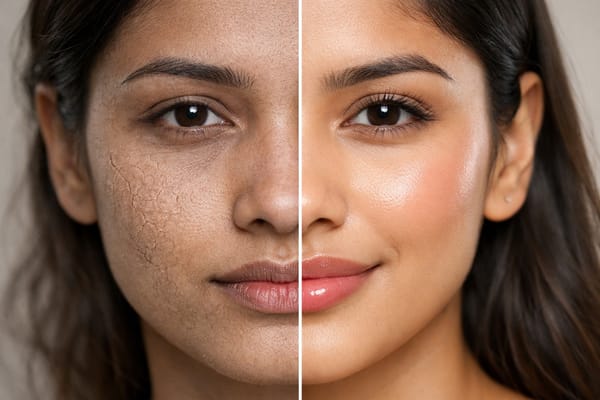
Since the skin regenerates during deep sleep, disrupted sleep patterns directly affect:
- Skin brightness
- Collagen production
- Barrier recovery
- Acne inflammation
This explains why many people notice dull or tired-looking skin after nights of heavy screen use.
3. Sedentary Screen Habits and Body Inactivity
High screen time often replaces physical activity.
Large-scale data analyses show that:
- 4+ hours of daily screen exposure correlates with reduced movement
- Sedentary behavior increases metabolic stress
- Chronic inactivity contributes to inflammatory responses
Inflammation plays a significant role in skin conditions such as acne, premature aging, and sensitivity.
4. Blue Light and Oxidative Stress on Skin
Emerging laboratory research suggests that prolonged blue light exposure may increase oxidative stress in skin cells.
Oxidative stress contributes to:
- Premature aging
- Pigmentation concerns
- Skin barrier weakening
While indoor screen exposure is significantly lower than direct sun exposure, cumulative daily exposure may still contribute to long-term stress effects.
5. The Digital Stress → Skin Cascade
Here’s the simplified biological pathway:
Excess Screen Time
↓
Sleep Disruption
↓
Elevated Stress Hormones
↓
Reduced Skin Repair
↓
Dullness, Breakouts, Early Aging Signs
The connection is indirect but biologically plausible and supported by sleep and stress research.
6. Practical Steps to Reduce Digital Stress
✔ Follow the 20-20-20 Rule
Every 20 minutes, look at something 20 feet away for 20 seconds.
✔ Avoid Screens 60 Minutes Before Sleep
Helps normalize melatonin production.
✔ Use Blue Light Filters in Evening
✔ Take Movement Breaks
Stand, stretch, or walk every hour.
✔ Maintain Skin Protection
Use sunscreen indoors and antioxidant skincare where appropriate.
Conclusion
Digital devices are powerful tools — but not managed screen time can influence mental well being, sleep quality, physical activity, and indirectly, skin health.
The goal is not elimination — but balance.
Mindful digital habits support:
- Better emotional stability
- Improved sleep
- Healthier, more resilient skin
In a digital world, awareness is protection.
FAQs About Screen Time and Health
Q: Does excessive screen time affect mental health?
A: Research suggests that prolonged screen time is associated with increased stress, anxiety, and sleep disruption, especially when combined with reduced physical activity.
Q: Can screen time cause dull skin?
A: Indirectly, yes. Screen exposure can disrupt sleep and increase stress hormones, which may reduce skin repair and contribute to dullness.
Q: Is blue light harmful to skin?
A: Laboratory research indicates that prolonged blue light exposure may increase oxidative stress in skin cells, potentially contributing to premature aging.
Q: How can I reduce digital stress?
A: Limiting screen use before bedtime, using blue light filters, taking regular breaks, and increasing physical activity can help reduce digital stress.
⚠️ Medical Disclaimer
This article is for informational and educational purposes only. It is not intended as medical advice, diagnosis, or treatment. Always consult a qualified healthcare professional regarding any medical concerns related to mental health, sleep disorders, or skin conditions.
References
Screen Time Definition - Wikipedia
Mental Health & Anxiety - Journal of Education and Health Promotion (NCBI)
Sleep Disruption & Melatonin - BMC Public Health
Reduced Screen Time Improves Mental Health
Sedentary Behavior & Physical Inactivity
Blue Light & Skin Oxidative Stress
The World Health Organization emphasizes limiting sedentary behavior and increasing daily physical activity to support overall physical and mental health.
Source: https://www.who.int/news-room/q-a-detail/sedentary-behaviour-recommended-levels-of-physical-activity