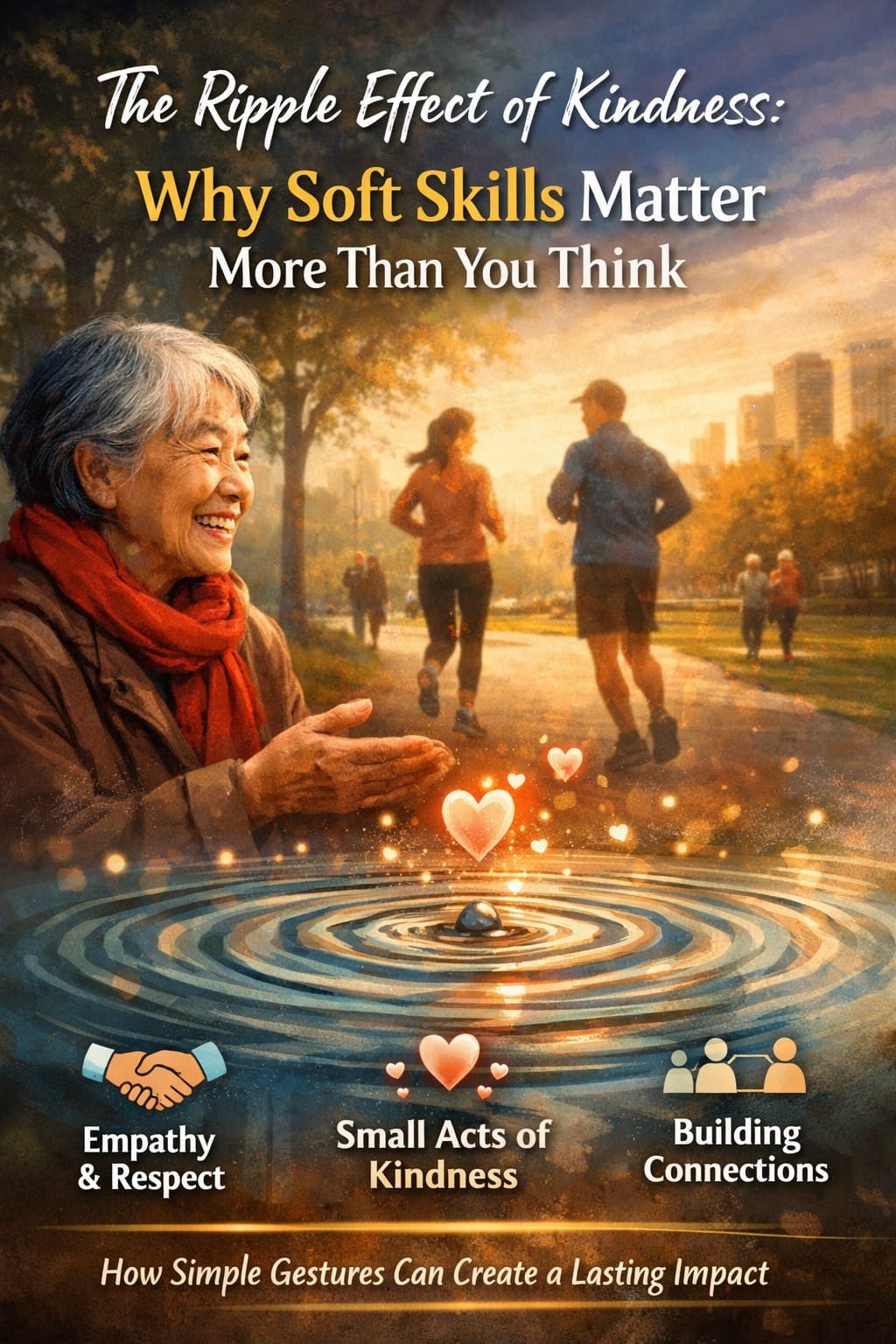
The Ripple Effect of Kindness: Why Soft Skills Matter More Than You Think
A simple act of courtesy revealed how kindness and soft skills quietly shape our daily lives, relationships, and long-term success.

Introduction: The Skills That Truly Shape Our Lives
In a world obsessed with degrees, certifications, and technical expertise, we often overlook the skills that quietly shape our daily experiences—soft skills. Skills like kindness, empathy, patience, and respect rarely dominate resumes, yet they deeply influence our happiness, relationships, and long-term success.
A simple moment in my daily life recently reminded me why soft skills are the true gems of life.
A Simple Encounter That Spoke Volumes
I was waiting to cross a path where a group of joggers were passing by. Instead of rushing through, I paused and gave them the right of way—a small, instinctive act of courtesy.
That moment didn’t go unnoticed.
An elderly Chinese woman walking nearby stopped, smiled warmly, complimented my shoes, and cheerfully wished me “Happy Chinese New Year.”
The interaction lasted only a few seconds, yet it left a lasting impression.
This wasn’t about shoes or greetings—it was about human connection.
What This Moment Taught Me About Soft Skills
This brief interaction revealed several essential soft skills in action:
- Empathy & Respect: Awareness of others’ space and time
- Kindness as a Universal Language: Small gestures speak louder than words
- Cultural Awareness: Respect transcends cultural boundaries
- Emotional Intelligence: Understanding and responding to human moments
Soft skills aren’t learned only in classrooms—they are practiced in everyday life.
Why Soft Skills Matter in Daily Life
Unlike hard skills, soft skills influence how we live and connect:
- They strengthen personal and professional relationships
- They reduce conflict and stress
- They build trust and emotional safety
- They create positive first impressions
- They enhance overall well-being
Even the smallest acts of kindness can create a ripple effect, positively impacting others in ways we may never fully see.
Simple Ways to Practice Soft Skills Every Day
You don’t need grand gestures—start with intention:
- Mindful Communication: Listen to understand, not to respond
- Genuine Appreciation: A sincere compliment can change someone’s day
- Everyday Courtesy: Giving way, holding doors, or offering help
- Cultural Sensitivity: Respect differences with curiosity
These habits quietly shape your character and influence how the world responds to you.
Conclusion: The Real Measure of Growth
While hard skills may open doors, soft skills determine how far you go and how fulfilled you feel along the way.
Kindness, empathy, and respect don’t just improve interactions—they cultivate a positive life “vibe,” support emotional health, and strengthen relationships.
Sometimes, all it takes is a pause, a smile, or a kind word to remind us of what truly matters.
❓ Frequently Asked Questions (FAQ)
Why are soft skills important in everyday life?
Soft skills help us communicate better, manage emotions, build relationships, and navigate social situations with empathy and respect.
Is kindness considered a soft skill?
Yes. Kindness is a core soft skill closely linked to emotional intelligence, empathy, and effective communication.
Can soft skills be learned or improved?
Absolutely. Soft skills are developed through awareness, practice, reflection, and everyday interactions.
How do soft skills differ from hard skills?
Hard skills are technical and measurable, while soft skills focus on behavior, mindset, and interpersonal abilities.
⚖️ Disclaimer
This article is based on personal experience and general observations. It is intended for informational and inspirational purposes only and should not be considered professional, psychological, or medical advice.