Eat Your Skincare: 7 Best Foods for Naturally Glowing and Healthy Skin
Your skincare routine doesn't begin in the bathroom, it begins in the kitchen. Explore 7 nutrient-rich foods that can help support healthy, radiant skin naturally, along with practical nutrition tips, lifestyle habits, and a simple meal plan for glowing skin.

Introduction
Many people spend significant amounts of money on skincare products while overlooking one of the most important factors affecting skin health: nutrition.
While cleansers, moisturizers, serums, and other skincare products can support your skincare routine, healthy and radiant skin begins with the nutrients you provide your body every day.
Your skin is the largest organ in your body. Like every other organ, it requires proper nourishment to repair itself, maintain elasticity, support collagen production, and protect against environmental stressors.
The foods you eat can influence hydration, inflammation levels, skin texture, and overall appearance. A balanced diet rich in vitamins, minerals, antioxidants, healthy fats, protein, and water can help support healthy-looking skin naturally.
In this guide, you'll discover the best foods for glowing skin, the science behind why they work, and practical ways to include them in your daily diet.
What Foods Are Best for Glowing Skin?
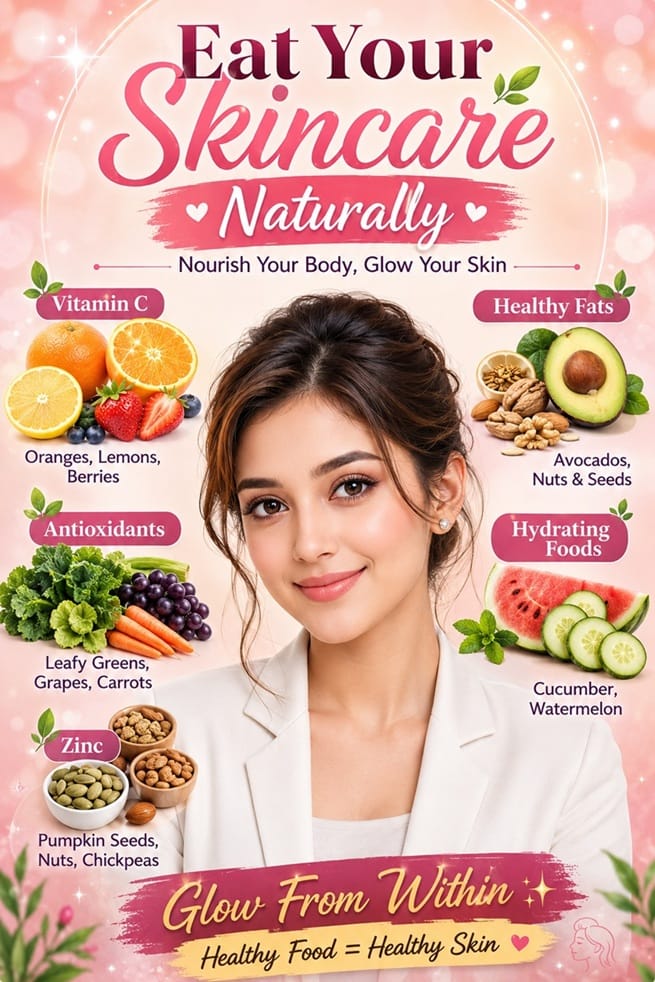
Some of the best foods that support healthy and radiant skin include:
- Citrus fruits rich in Vitamin C
- Avocados and nuts containing healthy fats
- Leafy greens packed with antioxidants
- Water-rich fruits and vegetables
- Zinc-rich foods such as pumpkin seeds and chickpeas
- Protein-rich foods that support tissue repair
- Omega-3-rich foods that help support the skin barrier
Adding a variety of these foods to your diet may help support healthier skin over time.
Why Nutrition Matters for Skin Health
Your skin is constantly renewing itself. Old skin cells are replaced by new ones, and this process requires a continuous supply of nutrients.
Key nutrients for skin health include:
- Vitamins
- Minerals
- Protein
- Healthy fats
- Antioxidants
- Water
When your diet lacks these nutrients, your skin may appear:
- Dry
- Dull
- Tired
- Less elastic
- More prone to irritation
A nutrient-rich diet supports your body's natural ability to maintain healthy skin from the inside out.
1. Vitamin C: The Glow Booster
Vitamin C plays a crucial role in collagen production. Collagen is a structural protein that helps maintain skin firmness and elasticity.
Benefits of Vitamin C
- Supports collagen production
- Helps maintain skin firmness
- Supports wound healing
- Protects against oxidative stress
- Promotes a brighter complexion
Best Food Sources
- Oranges
- Lemons
- Grapefruit
- Kiwi
- Strawberries
- Blueberries
- Guava
- Bell peppers
Easy Tip
Add citrus fruits or berries to your breakfast for a simple Vitamin C boost.
2. Healthy Fats: For Soft and Supple Skin
Healthy fats are essential for maintaining the skin's natural barrier function.
A strong skin barrier helps retain moisture and protects the skin from environmental stressors.
Benefits of Healthy Fats
- Supports skin hydration
- Helps maintain elasticity
- Supports overall skin health
- May help reduce skin dryness
Best Food Sources
- Avocados
- Almonds
- Walnuts
- Chia seeds
- Flaxseeds
- Olive oil
Easy Tip
Add sliced avocado to salads or sandwiches for a nutritious skin-friendly meal.
3. Antioxidants: Your Skin's Defense System
Every day, your skin is exposed to pollution, sunlight, and other environmental stressors.
These factors can generate free radicals, which may contribute to premature skin aging.
Antioxidants help neutralize these free radicals and support overall skin health.
Benefits of Antioxidants
- Support healthy skin cells
- Help protect against oxidative stress
- Support skin texture
- Promote overall skin wellness
Best Food Sources
- Blueberries
- Strawberries
- Grapes
- Spinach
- Kale
- Broccoli
- Carrots
Easy Tip
Try to include multiple colors on your plate each day. Different colors often provide different antioxidants.
4. Hydrating Foods: Moisture From Within
Hydration plays an important role in maintaining healthy-looking skin.
Although drinking water is important, many fruits and vegetables also contribute to your daily hydration needs.
Benefits of Hydration
- Supports normal skin function
- Helps maintain skin elasticity
- Supports overall wellness
- Contributes to healthy-looking skin
Best Hydrating Foods
- Cucumber
- Watermelon
- Tomatoes
- Celery
- Lettuce
- Oranges
Easy Tip
Include water-rich fruits and vegetables as snacks throughout the day.
5. Zinc: The Skin Repair Mineral
Zinc is an essential mineral involved in numerous biological processes, including tissue repair and immune function.
Benefits of Zinc
- Supports skin repair processes
- Supports immune health
- Helps maintain normal skin function
- Plays a role in cell growth
Best Food Sources
- Pumpkin seeds
- Chickpeas
- Lentils
- Beans
- Cashews
- Almonds
Easy Tip
Sprinkle pumpkin seeds over salads, yogurt, or oatmeal.
6. Protein: The Building Block of Healthy Skin
Protein is essential for maintaining and repairing tissues throughout the body, including the skin.
Many of the structures that support healthy skin are made from proteins.
Benefits of Protein
- Supports tissue repair
- Helps maintain skin structure
- Supports collagen production
- Aids normal cell regeneration
Best Food Sources
- Eggs
- Greek yogurt
- Fish
- Chicken
- Lentils
- Chickpeas
- Tofu
Easy Tip
Include a quality protein source with every meal.
7. Omega-3 Fatty Acids: Natural Support for the Skin Barrier
Omega-3 fatty acids are important fats that help support overall health, including skin health.
Benefits of Omega-3s
- Support skin barrier function
- Support hydration retention
- Help maintain healthy skin
- Support overall wellness
Best Food Sources
- Salmon
- Sardines
- Mackerel
- Flaxseeds
- Chia seeds
- Walnuts
Easy Tip
Add ground flaxseeds or chia seeds to smoothies and oatmeal.
Lifestyle Habits That Support Healthy Skin
Nutrition works best when combined with healthy lifestyle habits.
Stay Hydrated
Drink enough fluids throughout the day according to your body's needs, activity level, and climate.
Get Quality Sleep
Aim for 7-9 hours of sleep each night to support the body's natural repair processes.
Exercise Regularly
Regular physical activity supports circulation and overall health.
Manage Stress
Chronic stress may affect overall wellness and can influence skin appearance.
Protect Your Skin From the Sun
Use sunscreen and follow sun-safety practices when spending time outdoors.
Foods to Limit for Better Skin Health
While no single food causes skin problems for everyone, limiting highly processed foods may support overall health.
Consider moderating:
- Sugary drinks
- Excessively processed foods
- Deep-fried foods
- Refined carbohydrates
- Excessive alcohol consumption
Balance and moderation are key.
A Simple Skin-Friendly Daily Meal Plan
Breakfast
- Oatmeal
- Mixed berries
- Almonds
Mid-Morning Snack
- Orange
- Kiwi
Lunch
- Mixed vegetable salad
- Chickpeas
- Avocado
Evening Snack
- Pumpkin seeds
- Green tea
Dinner
- Leafy greens
- Lean protein source
- Colorful vegetables
Frequently Asked Questions
Can diet alone give me glowing skin?
Diet plays an important role in skin health, but the best results usually come from a combination of healthy eating, proper skincare, hydration, sleep, and sun protection.
How long does it take to see changes in skin appearance?
Results vary from person to person. Consistent healthy eating habits may contribute to noticeable improvements over several weeks.
Is Vitamin C from food better than supplements?
Whole foods provide Vitamin C along with fiber and other beneficial nutrients, making them an excellent choice for most people.
Which foods are good for acne-prone skin?
A balanced diet rich in vegetables, fruits, zinc-containing foods, and omega-3 sources may support overall skin health.
How much water should I drink daily?
Fluid needs vary based on age, climate, activity level, and individual circumstances. Drinking enough fluids to stay properly hydrated is generally recommended.
Are supplements necessary for healthy skin?
Most people can obtain essential nutrients from a balanced diet. Supplements may be appropriate in certain situations under professional guidance.
Can certain foods help reduce the appearance of wrinkles?
Foods rich in antioxidants, Vitamin C, protein, and healthy fats may help support skin structure and overall skin health.
What is the best fruit for glowing skin?
Citrus fruits, berries, kiwi, and guava are popular choices because they provide Vitamin C and antioxidants.
Do sugary foods affect skin health?
Excessive sugar consumption may contribute to inflammation and can affect overall health. Moderation is generally recommended.
Final Thoughts
Healthy skin is influenced by many factors, but nutrition remains one of the most important foundations.
Vitamin C, healthy fats, antioxidants, hydration, zinc, protein, and omega-3 fatty acids all play valuable roles in supporting healthy skin.
Rather than relying solely on topical products, consider nourishing your skin from within through a balanced and nutrient-rich diet.
Small, consistent improvements in your daily food choices can help support healthier, more radiant skin over time.
Remember: healthy skin starts with healthy habits.
Related Articles
- Natural Anti-Aging Foods for Women
- Benefits of Coconut Oil for Skin and Hair
- Best Vitamins for Healthy Skin
- Foods That Support Collagen Production Naturally
About the Author
Abhishek is a technology professional, researcher, and content creator who enjoys exploring topics related to health, wellness, nutrition, technology, and lifestyle. Through AbhishekOnline.com, he shares educational content designed to help readers make informed decisions and build healthier habits.
Disclaimer
This article is intended for informational and educational purposes only. It is not a substitute for professional medical advice, diagnosis, or treatment. Always consult a qualified healthcare professional, registered dietitian, or dermatologist regarding specific health concerns or dietary changes.